
Paraffin removal after embedding.
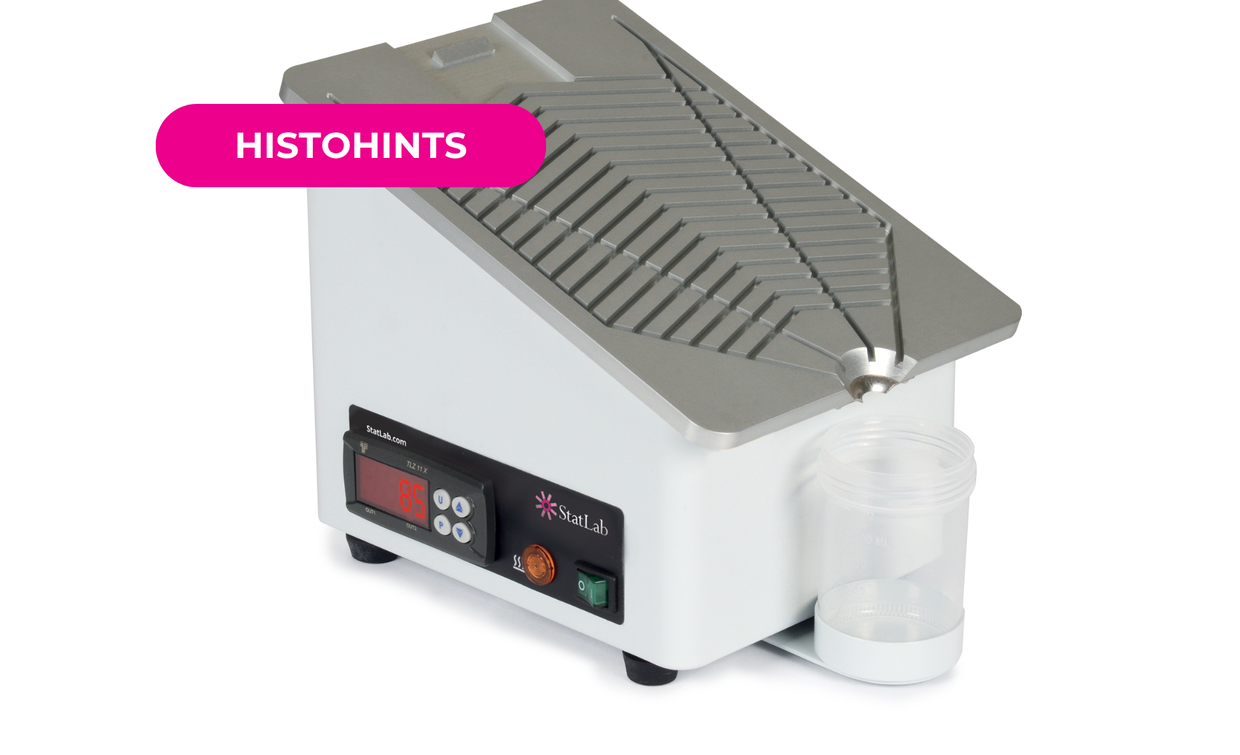
Best practices to protect cassette identification.
Excessive paraffin on tissue blocks after embedding may seem like a minor nuisance, but it can slow down the workflow, cause rework, and introduce avoidable risk. An overly aggressive cleanup of paraffin can damage cassette labels or barcodes, leading to scanning problems and specimen handling errors. It can also introduce safety risks when histotechs use sharp instruments to scrape excess paraffin from the blocks.
A standardized approach to paraffin removal after embedding helps protect both efficiency and specimen integrity. Whether your lab removes paraffin manually or uses a heated paraffin block trimmer, the key is to remove only the excess paraffin while leaving cassette identification untouched.
Why it Matters
- Safety risk
Manually scraping blocks with sharp tools can put histotechs at risk of injury if done too aggressively or in a rush.
- Barcode damage
Scraping too hard can remove printed ink or part of the barcode, causing misreads in specimen tracking systems.
- Specimen identification risk
Damaged labels increase the chance of manual workarounds, relabeling, or identification errors.
- Workflow inefficiency
Inconsistent cleanup methods lead to variable results and wasted time at the embedding bench.
Best Practices for Paraffin Removal
Using a paraffin block trimmer
Heated paraffin block trimmers are an efficient option because they remove wax with minimal risk to cassette labels and barcodes, and minimal risk of injury for the histotech.
Recommended technique
- Lightly press the edge of the tissue block against the heated surface.
- Hold for a few seconds to allow the excess paraffin to melt away.
- Lift the block straight off.
Important tips.
Do not rub the cassette aggressively across the heated surface or grooves. Excessive friction can remove printed ink and damage barcodes.
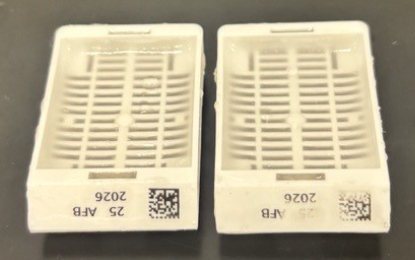
Image on left cassette lightly pressed on heated block surface.
Image on right scraped across heated surface and grooves.
Always reference your paraffin melting point and be sure to set your block trimmer within an optimal range of 2-4 degrees above the melting point Excessive heat can cause damage to printed information or added safety risk to the handler.
Using a sharp edge manually
Some techs prefer manual removal using a knife, scalpel, or the edge of a metal cassette mold. This method works well when done carefully but should be avoided if possible to reduce risk of injury.
Recommended technique
- Use a sharp, clean edge.
- Hold the cassette securely and scrape gently over the label area.
- Remove thin layers of paraffin rather than trying to remove it all at once.
Important tips
Avoid digging into the paraffin or applying extra force. Aggressive scraping increases the chance of damaging cassette identification.
Avoid rushing or distractions while performing manual paraffin trimming. Extra caution should be utilized to avoid physical trauma.
Paraffin removal is a small step in the embedding process, but technique matters. A careful, standardized approach helps preserve barcode readability, reduce identification risks, and keep the embedding workflow moving smoothly.
Recent Posts
-

Behind Every Breast Cancer Diagnosis
During Breast Cancer Awareness Month in October, we recognize patients and families, along with the
-

HT or HTL? Which path is right for you?
You like histology. You’ve been working in the lab, and now you’re starting to think about getting c
-
StatClick Prefill Handling and Closure
How to properly handle and close the StatClick Prefill for leak-proof transport. Follow your facili