
Every Cell Matters - The importance of standardization in cell block preparation.
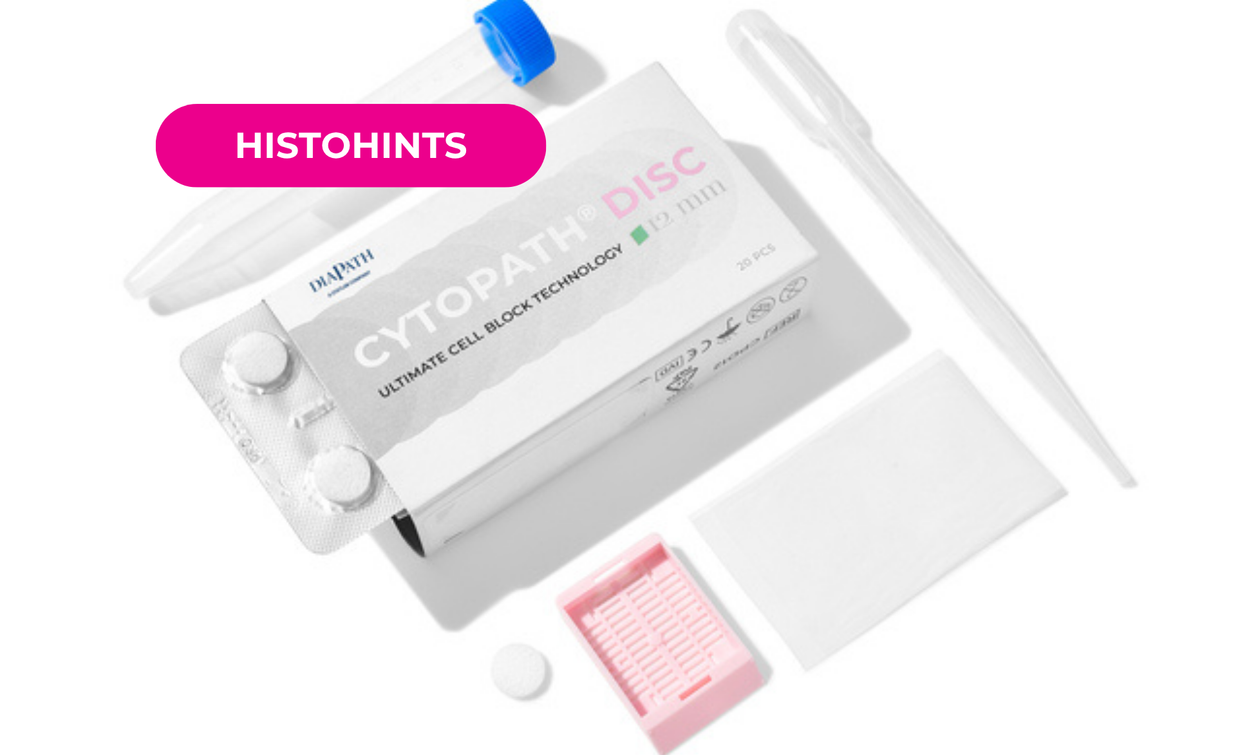
Cell blocks are an essential part of many pathology workflows, transforming cytology specimens into a format that allows for additional testing, including IHC and molecular testing. For many specimens, especially those with limited cellular material, the cell block can be the key to providing valuable diagnostic information.
But preparing consistent, high-quality cell blocks can be challenging.
Variability in specimen type, cellularity, preparation technique, and tech experience can all impact the final cell block. Differences in preparation methods can lead to inconsistent cell distribution, limited diagnostic material, and challenges with additional testing.
A More Consistent Approach to Cell Block Preparation
CytoPath Discs were designed to help labs simplify and standardize cell block preparation. By reducing complex steps and eliminating excess materials commonly used in traditional methods, CytoPath Discs provide a consistent approach that integrates easily into existing workflows.
Ready to use and compatible with commonly used cytology fixatives, the single-use discs integrate easily into existing lab workflows.
The disc design helps concentrate cells and distribute them evenly throughout the matrix, supporting preservation of cellular morphology and sample integrity. This can be especially valuable when working with low-cellularity samples where maximizing every available cell is critical. Compatible with downstream applications such as IHC and molecular testing, CytoPath Discs reduce turnaround time and help labs create a more consistent and efficient cell block workflow.
Why Consistency Matters
A good cell block does more than just capture cells. It needs to preserve morphology, maintain specimen integrity, and provide enough material for any subsequent testing.
However, many labs use different techniques for cell block preparation. Some rely on agar or gel-based methods, others use plasma-thrombin techniques, and some have developed their own in-house protocols.
Common challenges with cell block preparation include:
- Uneven distribution of cells throughout the block
- Difficulty locating diagnostic material during sectioning
- Not enough cells present for IHC or molecular testing
- Repeat procedures that can delay turnaround time
For labs working with small or limited specimen quantities, every cell matters.
Benefits of a More Consistent Approach
A standardized cell block prep process can help improve reliability from specimen to specimen and maximize cell concentration, ensuring labs are getting the most diagnostic value from each specimen.
This can result in:
- More consistent specimen quality
- Reduced hands-on prep time
- Improved confidence in ancillary testing
- Easier training and competency
Reducing variability in cell block preparation is about more than improving efficiency—it’s about creating reliable, reproducible specimens that support accurate diagnoses and better patient care.
Recent Posts
-

Behind Every Breast Cancer Diagnosis
During Breast Cancer Awareness Month in October, we recognize patients and families, along with the
-

HT or HTL? Which path is right for you?
You like histology. You’ve been working in the lab, and now you’re starting to think about getting c
-
StatClick Prefill Handling and Closure
How to properly handle and close the StatClick Prefill for leak-proof transport. Follow your facili