
Five cassette labeling hacks when using ink pens.
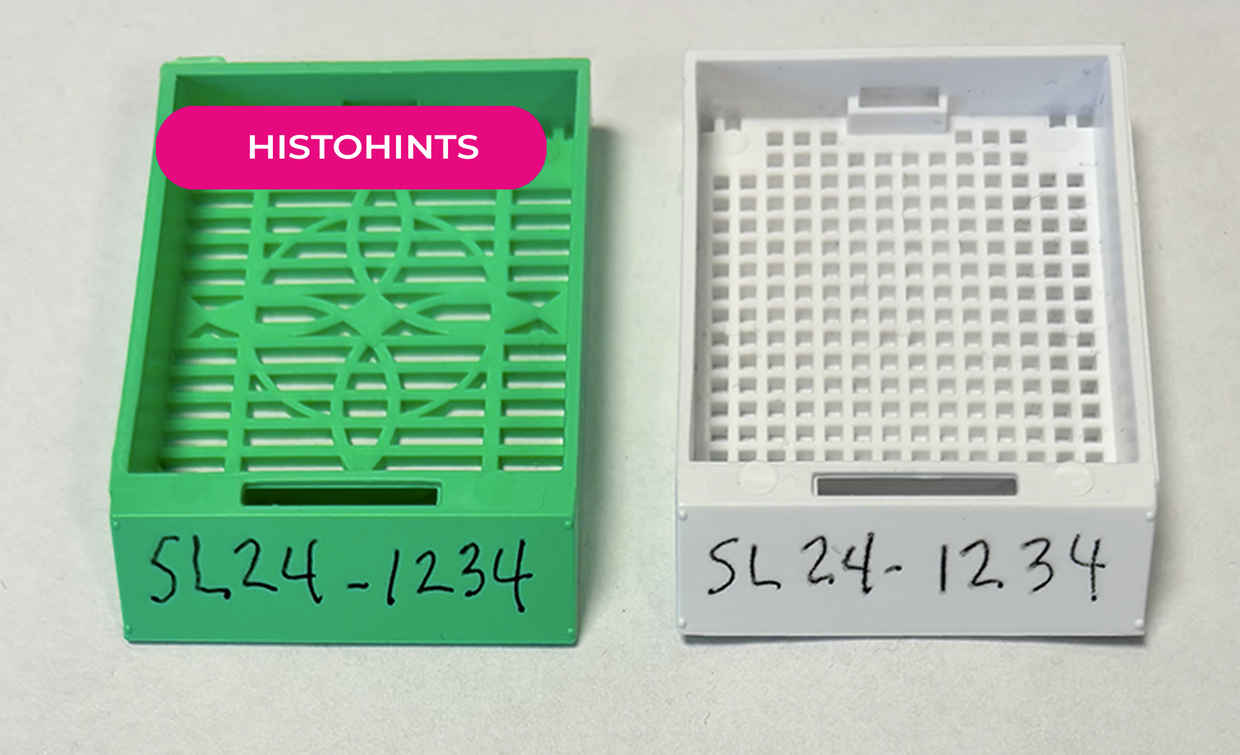
Not every lab pen will work effectively with every cassette. Explore these helpful hints to safeguard hand-labeled cassette ink from washing off during processing.
1. Let the ink dry completely.
Allow several seconds for the ink to dry before submerging cassette in formalin or other fixative.
2. Ensure that the face of the cassette is dry.
Allow several seconds for the ink to dry before submerging cassette in formalin or other fixative.
3. Store pens horizontally.
Lay pens flat when not in use. If stored vertically, the ink can settle at one end or dry out.
4. Test cassettes.
Cassette manufacturers may use a release spray that adheres to the writing surface of the cassette hindering the adherence of the ink. This can be tested by washing the cassette in alcohol to remove any chemicals, drying the cassette, writing with the pen and allow to dry, and processing the cassette as normal. If the ink still adheres to the cassette, it is an issue with the cassette and not the pen.
5. Check solutions in the processor.
If solutions are not rotated often enough, there may be excess alcohol in the xylenes or excess xylenes in the paraffin could be causing removal of the ink.
Check out StatMark Pens, excellent for both cassettes and slides, and made to withstand exposure to common processing chemicals.
Recent Posts
-
StatClick Prefill Handling and Closure
How to properly handle and close the StatClick Prefill for leak-proof transport. Follow your facili
-

Silver stains start here: clean glassware.
We’ve all had that glassware that looks clean—but silver stains can tell a different story. Tiny tra
-

Color Matters: 10 tips for getting the most from Tissue Marking Dyes.
Tissue Marking Dyes may seem like a simple part of the grossing workflow, but small handling habits