
Struggling with faded laser cassette print after decal? We’ve got you covered.
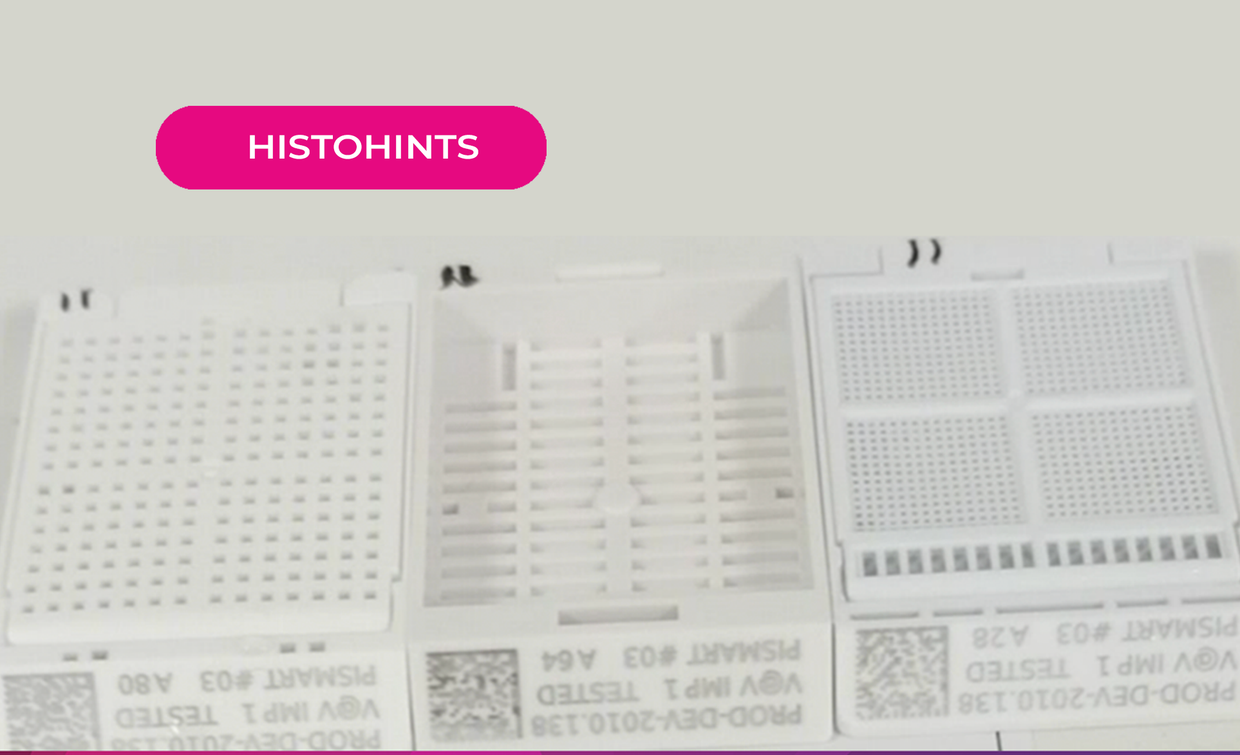
If your lab routinely processes bone or heavily calcified specimens, decal solutions are likely part of your routine. But have you noticed that after placing your laser-printed cassettes into decal, the print fades or washes away – compromising specimen labeling and tracking, and even more importantly, patient safety?
Some decal solutions can cause print to fade in as little as one hour – especially with certain cassettes. If you’ve run into this, you’re not alone. But there’s a better option!
PiSmart laser cassettes are engineered to withstand decal exposure, preserving print clarity much longer. Instead of fading within an hour, these cassettes can endure double or even triple the time without compromising readability or scannability!
Figure 1: RDC (rapid decalcifier) at 2 hours. PiSmart is the middle cassette.
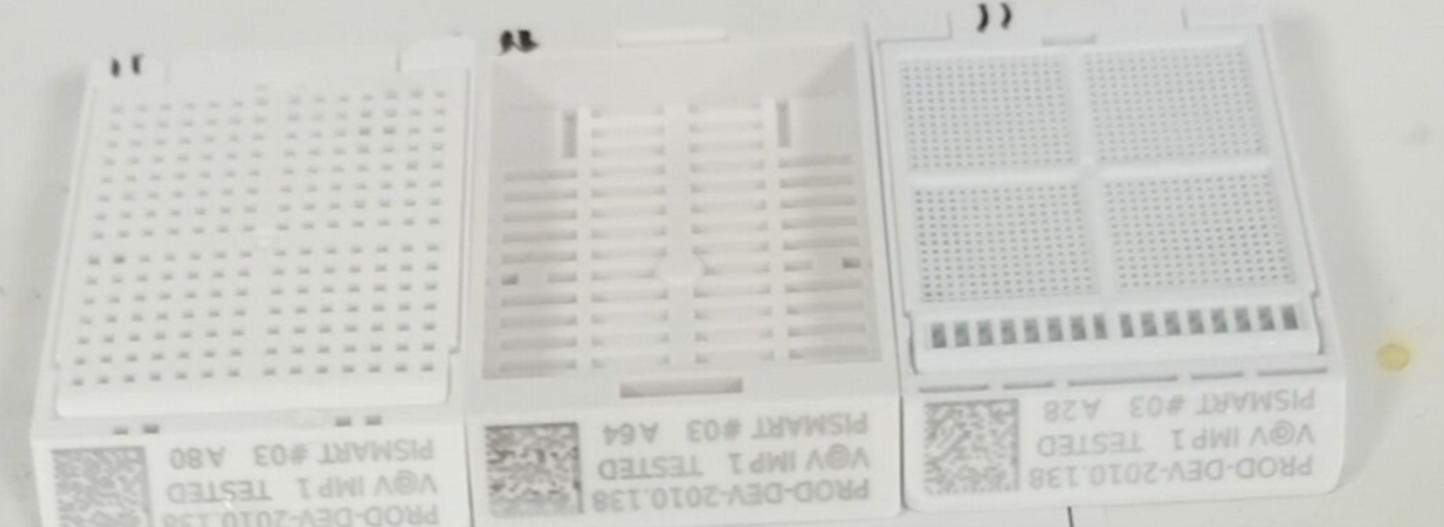
Figure 2: Immunocal at 30 hours. PiSmart is the middle cassette.
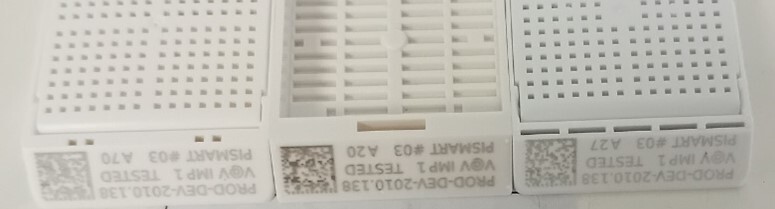
Check out our white paper that dives into the performance results and how these cassettes can enhance your lab’s workflow and reliability:
Assessing cassettes during decalcification.
Recent Posts
-
StatClick Prefill Handling and Closure
How to properly handle and close the StatClick Prefill for leak-proof transport. Follow your facili
-
Silver stains start here: clean glassware.
We’ve all had that glassware that looks clean—but silver stains can tell a different story. Tiny tra
-
Color Matters: 10 tips for getting the most from Tissue Marking Dyes.
Tissue Marking Dyes may seem like a simple part of the grossing workflow, but small handling habits