
Inspection Coming! 10 steps to help prepare for CAP/CLIA inspections.
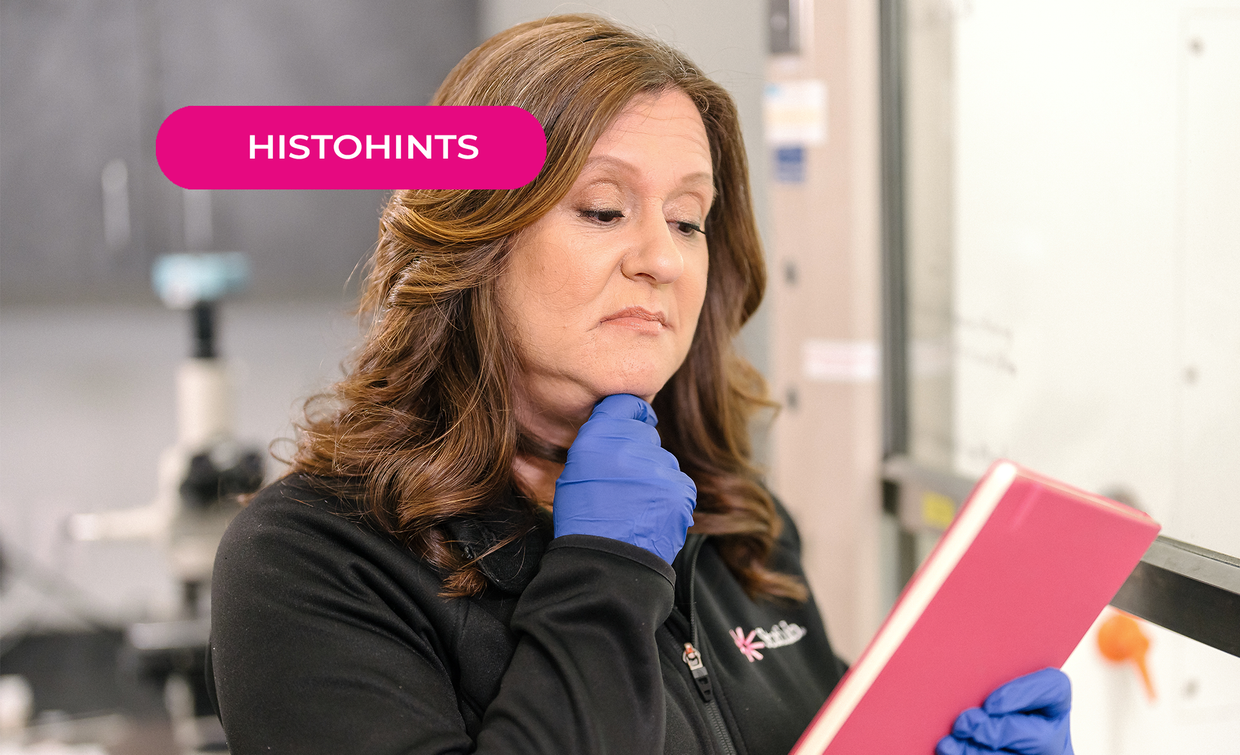
Is inspection season approaching and you’re starting to feel that familiar mix of urgency and uncertainty? You’re not alone! Whether it’s a CAP or CLIA year, even the most organized histology labs can feel the pressure. To help make things easier, we’ve put together a checklist to get your lab inspection-ready.
1 Be familiar with the CAP/CLIA checklist that will be used
Know what inspectors will be looking for and any updated or new items. Create a book of documents to go with each checklist item to have available.
2 Review Policy and Procedure Manuals
Update all policies and procedures to be in accordance with updated or new checklist items, as well as in compliance with any changes that may have occurred in your lab. Ensure that manuals have been reviewed and signed off on.
3 Review all Documentation Forms
Check that the most current version is being used and that they are accurately filled out and up-to-date. Forms can include maintenance logs, solution rotation schedules, temperature logs, and competency and training verification.
4 Check Reagent Labels
Every reagent needs to be labeled with content, storage requirements, expiration date, and date of preparation (if done in the lab).
5 Test Method Verification and Validation
Validation/verification processes should be documented for any new test or test system. This may include new instrumentation, new antibodies or clones, staining protocols, or reagents.
6 Prepare Case and Slide Examples
Prepare cases and corresponding slides for review. These can include H&Es, IHC (both non-predictive and predictive markers), special stains, cytology, frozens, and any other testing utilized in your lab.
7 Corrective Action Procedures
Occasionally there may be tissue carryover, mislabeling, wrong stain done, or other quality issues. Corrective actions are to be put in place for when issues do occur.
8 Coach the Team
All team members need to know where to find SDS sheets, policies and procedures, be able to explain the daily workflow and what their specific tasks are. If they are asked something they are not sure of, it is okay to provide that as an answer with a follow up that they will find out or direct to someone who can answer.
9 Clean
A clean lab is more welcoming to inspectors. Cleaning will allow you to uncover expired or mislabeled reagents, older versions of policies and procedures, and any excess clutter. Be sure to get rid of anything that should not be in the lab (food and drink, lotions, etc).
10 Relax
Remember that inspectors are peers. Relax and know that you are ready!
Recent Posts
-
StatClick Prefill Handling and Closure
How to properly handle and close the StatClick Prefill for leak-proof transport. Follow your facili
-
Silver stains start here: clean glassware.
We’ve all had that glassware that looks clean—but silver stains can tell a different story. Tiny tra
-
Color Matters: 10 tips for getting the most from Tissue Marking Dyes.
Tissue Marking Dyes may seem like a simple part of the grossing workflow, but small handling habits