
Reliability by design: How the Donatello Tissue Processor protects patient samples and minimizes downtime.
Background
In anatomic pathology, tissue processing is one of the most critical steps in the preparation of diagnostic
specimens. Any interruption in the processing workflow—whether caused by a fluidic blockage, valve failure, power outage, or mechanical malfunction—can place irreplaceable patient samples at risk. Laboratories require more than just processing performance; they require confidence that their tissue processor can reliably complete protocols under real-world operating conditions.
The Donatello Tissue Processor from Diapath was engineered around a core philosophy: Reliability by Design. Donatello incorporates multiple layers of preventative engineering, system redundancy, intelligent automation, and remote support capabilities designed to protect both the instrument and the tissue samples entrusted to it.
From its proprietary Anti Block System (ABS) and robust fluidics architecture to the SelfCheck+ diagnostic platform and E.V.A. (Emergency Virtual Assistant) recovery algorithm, every aspect of the Donatello has been developed to maximize uptime, minimize failures, and ensure sample integrity.
The Challenge of Processing Reliability
Tissue processors operate in one of the most demanding environments in the laboratory. Daily exposure to
paraffin, tissue debris, alcohols, xylene substitutes, and formalin creates numerous opportunities for fluidic
obstructions and mechanical wear. Donatello was specifically designed to address these risks before they
become failures.
Reliability Starts with Fluidic Design
The foundation of Donatello’s reliability is its advanced fluidic architecture. Every component of the system was engineered to reduce the likelihood of blockages while maintaining efficient reagent movement throughout the processing cycle.
A primary source of fluidic issues in tissue processors is tissue debris entering the reagent transport system.
Over time, fragments of tissue can accumulate within tubing, pumps, valves, and filters, creating restrictions that negatively impact reagent exchange and system performance. To combat this, Donatello incorporates the Anti Block System (ABS).
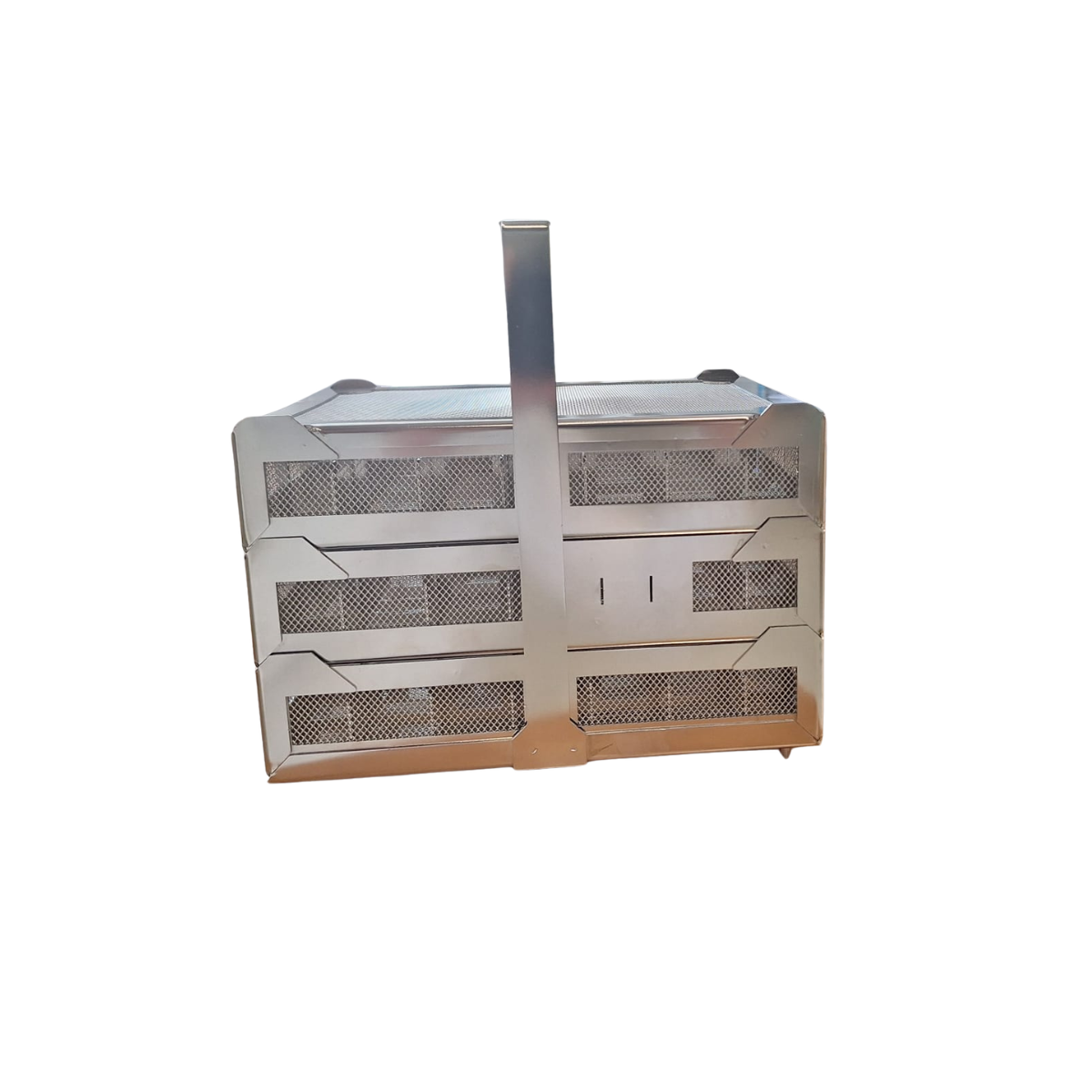
The ABS starts with a specially designed mesh cassette basket that serves as a first line of defense against debris migration. The basket helps contain tissue fragments and prevents larger particles from entering the fluid pathway during processing operations. This reduces the probability of downstream blockages and contributes to long-term system reliability.
Image 1. Donatello Mesh Cassette Basket
Large-Diameter Fluid Pathways
Donatello’s large-diameter fluid pathways minimize the risk of blockages, improve reagent flow consistency, and provide greater tolerance to tissue debris for enhanced long-term reliability.
Powerful Diaphragm Pump Technology
A durable, chemical-resistant diaphragm pump delivers reliable reagent transport with reduced maintenance
requirements and long operational life.
Integrated Filtration
Strategically placed filters capture residual debris before it reaches critical components, protecting the fluidic system, extending service life, and further improving system reliability.
| Downtime Causes | Impact |
|
|
Reliability Through Redundancy
One of Donatello’s greatest reliability differentiators is its fluid control architecture. Many tissue processors rely on a single rotary valve to control reagent movement. While effective under normal conditions, it creates a single point of failure. If the valve becomes contaminated with paraffin, wears mechanically, or seizes from formalin salt buildup, the processor can become inoperable.
Donatello’s Discrete Solenoid Valve Design
Donatello takes a fundamentally different approach.
Instead of a single rotary valve, Donatello uses individual solenoid isolation valves distributed throughout the fluidics system.
If one valve fails, intelligent recovery strategies may allow processing to continue—something not possible
with traditional rotary valve systems.
SelfCheck+: Proactive Reliability Verification
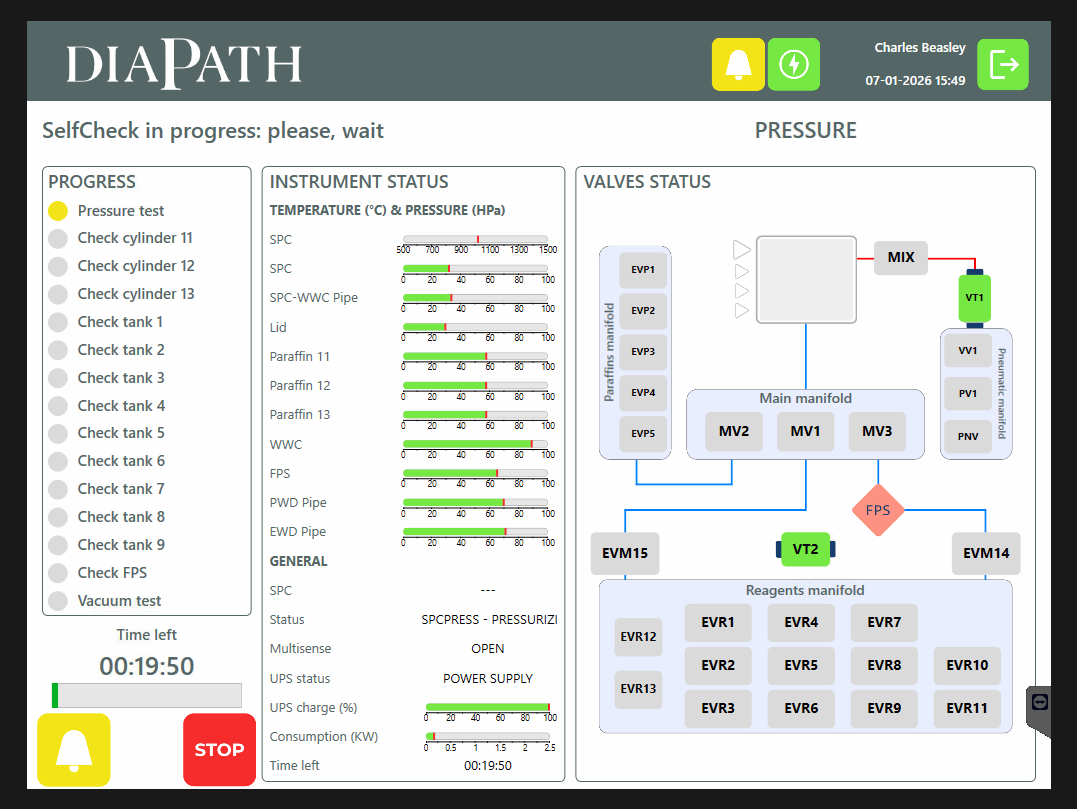
Before every run, SelfCheck+ verifies pumps, valves, sensors, and fluid pathways to identify potential issues
before processing begins, helping reduce unexpected interruptions and protecting valuable patient samples.
Image 2. Donatello SelfCheck Interface
E.V.A.: Intelligent Response to Unexpected Events
E.V.A. (Emergency Virtual Assistant) evaluates system conditions and determines the best response to
unexpected events. Rather than immediately stopping processing, it analyzes available options to protect
tissue samples and complete the protocol. For example, if one reagent tank becomes unavailable, E.V.A. can
automatically switch to another tank containing the same reagent and continue processing.
This minimizes the impact of isolated component failures.
Protecting Tissue During Power Interruptions
The ultimate measure of reliability is not merely keeping the instrument running—it is protecting patient tissue when the instrument cannot continue.
Donatello’s Safe Reagent Protocol accomplishes exactly that. When coupled with an Uninterruptible Power
Supply (UPS), this extends protection even further.
During an extended power interruption, Donatello evaluates protocol status, determines whether completion is possible and executes tissue preservation procedures, if necessary.
This ensures that valuable patient samples remain protected even during events entirely outside laboratory
control.
If E.V.A. determines that a processing protocol cannot be completed—such as during an extended power outage—it prevents tissue from remaining in reagents like alcohol for prolonged periods, which can cause
excessive dehydration and brittleness. This helps preserve embedding and sectioning quality, tissue morphology, and diagnostic integrity. Instead of allowing samples to remain in a potentially damaging reagent, the Safe Reagent Protocol can automatically initiate a tissue preservation strategy that:
- Removes the reagent currently occupying the retort
- Identifies a user-designated safe reagent
- Transfers the safe reagent into the retort
- Preserves tissue integrity until intervention
In the example above, alcohol may be evacuated and replaced with formalin, providing a safer environment
for prolonged specimen storage.
Remote Connectivity and Global Support
Reliability extends beyond hardware design. When service events occur, rapid diagnosis and resolution are
essential.
Secure remote connectivity allows authorized support personnel to diagnose issues, implement corrective
actions, and guide recovery without an onsite visit. Approximately 80% of service issues can be resolved
remotely, reducing downtime and restoring operation faster.
Reliability That Delivers Peace of Mind
Every tissue sample entering a processor represents a patient awaiting answers. Every tissue sample represents a patient awaiting answers, making reliability critical to both laboratory efficiency and patient care. Through redundant fluidics, proactive diagnostics, intelligent recovery algorithms, Safe Reagent protection, and remote support, Donatello is engineered to maximize uptime while protecting specimen integrity. That’s Reliability by Design.
Recent Posts
-

Behind Every Breast Cancer Diagnosis
During Breast Cancer Awareness Month in October, we recognize patients and families, along with the
-

HT or HTL? Which path is right for you?
You like histology. You’ve been working in the lab, and now you’re starting to think about getting c
-
StatClick Prefill Handling and Closure
How to properly handle and close the StatClick Prefill for leak-proof transport. Follow your facili