
Before It Goes Down the Drain: Understanding formalin neutralization.
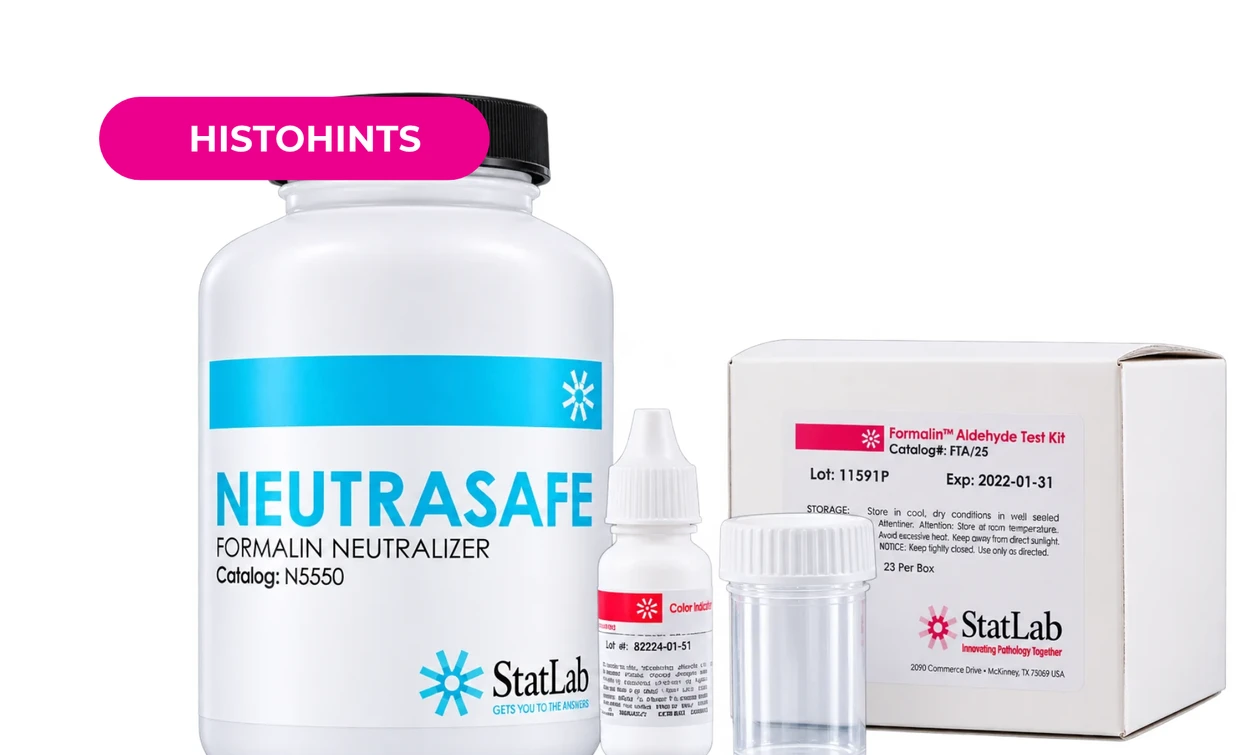
Formalin is a part of everyday life in the histology lab, but what do we do with it after it’s used? Can it just go down the drain?
No—not automatically.
Formalin is a chemical waste that needs to be handled and disposed of according to local regulations and your facility’s procedure. Depending on the situation, neutralization may be part of the process. But what does “neutralized” actually mean?
Formalin neutralization is a chemical process where a neutralizer reacts with formaldehyde, converting it into other chemical compounds and reducing the amount of free, reactive formaldehyde.
You may have heard that flushing with lots of water neutralizes it, or that adding a neutralizer automatically makes it safe to pour down the drain. But are these myths or facts? Let’s take a closer look.
Myth: Diluting formalin neutralizes it.
Fact: Dilution and neutralization are not the same thing.
Neutralization is a chemical reaction that changes formaldehyde into different chemical compounds. Dilution simply reduces the concentration of formaldehyde by adding liquid. The formaldehyde is still present; it’s just less concentrated.
Myth: If I can’t smell formalin anymore, it’s been neutralized.
Fact: A decrease in odor doesn’t mean that exposure has been eliminated.
Our noses are not a reliable way to determine whether formaldehyde has been adequately neutralized. A reduction in odor may simply mean that less formaldehyde is present in the air—not that the chemical has been neutralized.
Myth: As soon as neutralizer is added, it’s safe to pour down the drain.
Fact: Not automatically. Different neutralizers use different chemical processes and may require specific reaction times to convert formaldehyde into other chemical compounds. Follow the manufacturer’s recommended contact time and approved testing method to verify that the treatment has been completed as intended.
Even after proper neutralization, drain disposal is not automatically preferred. Refer to your facility’s SOPs, EHS guidance, and local waste regulations to determine whether the treated waste is approved for drain disposal.
How do you neutralize formalin?
There isn’t one universal neutralization method for formalin waste. Commercial neutralizers use different chemical processes, so instructions for use, required reaction times, and verification methods can vary.
Always follow the manufacturer’s instructions for neutralization and testing, along with your facility’s chemical-waste procedures and regulations. Verify that the treatment meets the requirements for intended disposal method before disposing of the waste.
A typical neutralizing process looks something like this:
- Collect the formalin waste.
Place formalin waste in the designated container according to your lab’s procedures.
- Add the neutralizer.
Use a neutralizer specifically intended for formalin/formaldehyde and add the recommended amount according to the manufacturer’s instructions. Adding more neutralizer after the chemical reaction has started may not be effective, so it’s important to measure and add the correct amount from the beginning.
- Allow the required reaction time.
Neutralization is a chemical reaction, not just a dilution. The required reaction time can vary significantly between products. Some may require only minutes, while others could take a few hours.
- Verify neutralization is complete.
Use the testing or verification method and kit specified by the manufacturer. Testing methods or kits are not interchangeable, and using an incompatible test with a neutralizer may produce inaccurate results.
Keep in mind that pH alone (typically using test strips) does not confirm successful neutralization. Also, don’t does assume that allowing the required reaction time alone means neutralization is complete—verification is still necessary.
- Dispose of the neutralized product appropriately.
Follow your facility’s requirements and applicable local, state, and federal regulations for disposal.
There’s more to neutralizing formalin than just adding a neutralizer. The product, amount, reaction time, verification, and final disposal all matter. Follow the manufacturer’s instructions and your lab’s established procedures, not a recipe passed down from tech to tech. What worked for one lab—or has “always been done this way”—may not be the right approach for yours.
Recent Posts
-
Before It Goes Down the Drain: Understanding formalin neutralization.
Formalin is a part of everyday life in the histology lab, but what do we do with it after it’s used?
-

Behind Every Breast Cancer Diagnosis
During Breast Cancer Awareness Month in October, we recognize patients and families, along with the
-

HT or HTL? Which path is right for you?
You like histology. You’ve been working in the lab, and now you’re starting to think about getting c