
Assessing cassette reliability.
PiSmart cassettes deliver consistent and reliable performance.
Background
Histotechnicians are faced with increasing workloads and are entrusted to deliver high quality specimens every day. They require high quality products and prefer those which can handle the demands of going through grossing to embedding to long-term storage using modern lab equipment. StatLab PiSmart cassettes were put to the test to prove they can meet the demands of this challenging workflow.
Histotechnicians are faced with increasing workloads and are entrusted to deliver high quality specimens every day. They require high quality products and prefer those which can handle the demands of going through grossing to embedding to long-term storage using modern lab equipment. StatLab PiSmart cassettes were put to the test to prove they can meet the demands of this challenging workflow.
Put to the Test to Ensure Equivalency and Usability
PiSmart cassettes were tested at 4 customer sites, including printing, processing, embedding, sectioning and overall usability. A total of 160 cassettes were tested at each point in the workflow. At each site, we compared 20 white cassettes manufactured at our UK manufacturing site to 20 orange cassettes manufactured at our US manufacturing site to ensure equivalency between sites and color variants.
PiSmart cassettes were tested at 4 customer sites, including printing, processing, embedding, sectioning and overall usability. A total of 160 cassettes were tested at each point in the workflow. At each site, we compared 20 white cassettes manufactured at our UK manufacturing site to 20 orange cassettes manufactured at our US manufacturing site to ensure equivalency between sites and color variants.
How Equivalency and Usability Was Measured
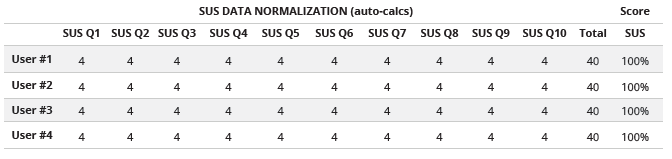
Equivalency was measured by each cassette’s print quality on PiSmart printers (software version 6.6.1 and 6.6.3) by ensuring customers felt readability of each character and first time barcode scanning success rate was acceptable for daily use in their lab. These criteria were measured across the workflow at point of printing, after tissue processing, and after embedding. Cassettes were tested in tissue processing reagents for both traditional (Sakura VIP) and microwave (Milestone Logos) tissue processors. In addition, at the embedding station, they were challenged with both scraping and paraffin block trimmers to ensure that the patented pips design (Figure 1) protected the print face.To measure if cassettes were easy-to-use, we employed the System Usability Scale (SUS)1. Users were asked questions on the likability of cassettes, ease of use, support requirements, and learning curve. Results were recorded from 1-5 and normalized for a score from 0-100. Low scores are considered to be 55-69, average 60-84, and above average 85-100. At StatLab, we aim for our products to be in the “above average” category. Questions asked:
In addition to print and scan quality, we challenged cassettes with paraffin embedding to check for potential leaks. Each user embedded according to their standard workflow. We hypothesized that there would not be leaking however wanted to make sure that these were robust cassettes. Embedding molds tested included metal molds from StatLab, Simport, and Sakura. Plastic molds were tested as well. We noted a 0% leak rate across all cassettes.
Equivalency was measured by each cassette’s print quality on PiSmart printers (software version 6.6.1 and 6.6.3) by ensuring customers felt readability of each character and first time barcode scanning success rate was acceptable for daily use in their lab. These criteria were measured across the workflow at point of printing, after tissue processing, and after embedding. Cassettes were tested in tissue processing reagents for both traditional (Sakura VIP) and microwave (Milestone Logos) tissue processors. In addition, at the embedding station, they were challenged with both scraping and paraffin block trimmers to ensure that the patented pips design (Figure 1) protected the print face.To measure if cassettes were easy-to-use, we employed the System Usability Scale (SUS)1. Users were asked questions on the likability of cassettes, ease of use, support requirements, and learning curve. Results were recorded from 1-5 and normalized for a score from 0-100. Low scores are considered to be 55-69, average 60-84, and above average 85-100. At StatLab, we aim for our products to be in the “above average” category. Questions asked:
- I think that I would like to use this cassette frequently
- I found the cassette unnecessarily complex
- I thought the cassette was easy to use
- I think that I would need the support of a technical person to be able to use this cassette
- I found the various functions in this cassette were well integrated
- I thought there was too much inconsistency in this cassette
- I would imagine that most people would learn to use this
cassette very quickly - I found the cassette very cumbersome to use
- I felt very confident using the cassette
- I needed to learn a lot of things before I could get going with this cassette
In addition to print and scan quality, we challenged cassettes with paraffin embedding to check for potential leaks. Each user embedded according to their standard workflow. We hypothesized that there would not be leaking however wanted to make sure that these were robust cassettes. Embedding molds tested included metal molds from StatLab, Simport, and Sakura. Plastic molds were tested as well. We noted a 0% leak rate across all cassettes.
Table 1.
Leak Rate and Print Quality Across Workflow (n = 20 white and n = 20 orange)
Leak Rate and Print Quality Across Workflow (n = 20 white and n = 20 orange)
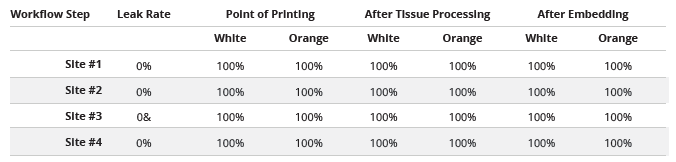
Table 2. Scannability Across Workflow
(n = 20 white and n = 20 orange) The table below shows the data collected for scannability testing.
(n = 20 white and n = 20 orange) The table below shows the data collected for scannability testing.


Table 3.
Usability Testing Results
Usability Testing Results
Block Chunk Testing Results
Lastly, the histotechs sectioned the cassettes to make sure there was no block chunking (defined as minimal paraffin due to wax coming off the cassette or improper cuts). User 4 noted that “the cassettes are sturdy, robust, and well made. I would be happy to use them in my lab”. See Figure 3 for the end result of the testing.
Lastly, the histotechs sectioned the cassettes to make sure there was no block chunking (defined as minimal paraffin due to wax coming off the cassette or improper cuts). User 4 noted that “the cassettes are sturdy, robust, and well made. I would be happy to use them in my lab”. See Figure 3 for the end result of the testing.
Conclusion
Data indicated that the cassettes manufactured at the US site were equivalent to the UK site across the workflow at point of printing, after tissue processing, and after embedding. In each of the tested situations, the cassettes not only performed equivalently but achieved a 100% print and scan rate across all 4 sites. In addition, usability of the cassettes was found to be “above average” with an SUS score of 100%.Customers can be confident in robust performance and quality when using PiSmart cassettes with PiSmart printers.
Data indicated that the cassettes manufactured at the US site were equivalent to the UK site across the workflow at point of printing, after tissue processing, and after embedding. In each of the tested situations, the cassettes not only performed equivalently but achieved a 100% print and scan rate across all 4 sites. In addition, usability of the cassettes was found to be “above average” with an SUS score of 100%.Customers can be confident in robust performance and quality when using PiSmart cassettes with PiSmart printers.
Figure 1. Patented PiSmart Pips Design
Protects print face during paraffin removal
Protects print face during paraffin removal
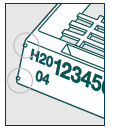

Figure 2.
Cassettes after embedding with no leakage observed.
Cassettes after embedding with no leakage observed.
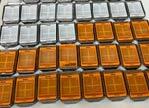

Figure 3.
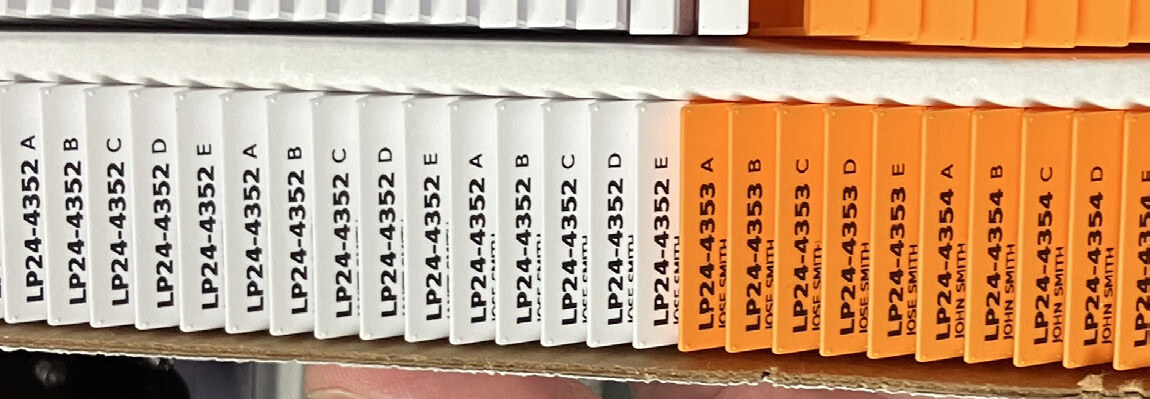
Cassettes after processing ready to be archived.
Cassettes after processing ready to be archived.

Recent Posts
-

KT Slides & Background Staining
Background Whole slide imaging (WSI) is gaining widespread adoption in diagnostic and research path
-
Happy National Histotechnology Professionals Day!
Thank you for the vital role you play in providing the best possible patient care. We see your hard
-
Why HCA Mid-America Division only uses KT slides in their lab.
One lab's story of overcoming tissue wash challenges.