
Mastering manual coverslipping in histology.
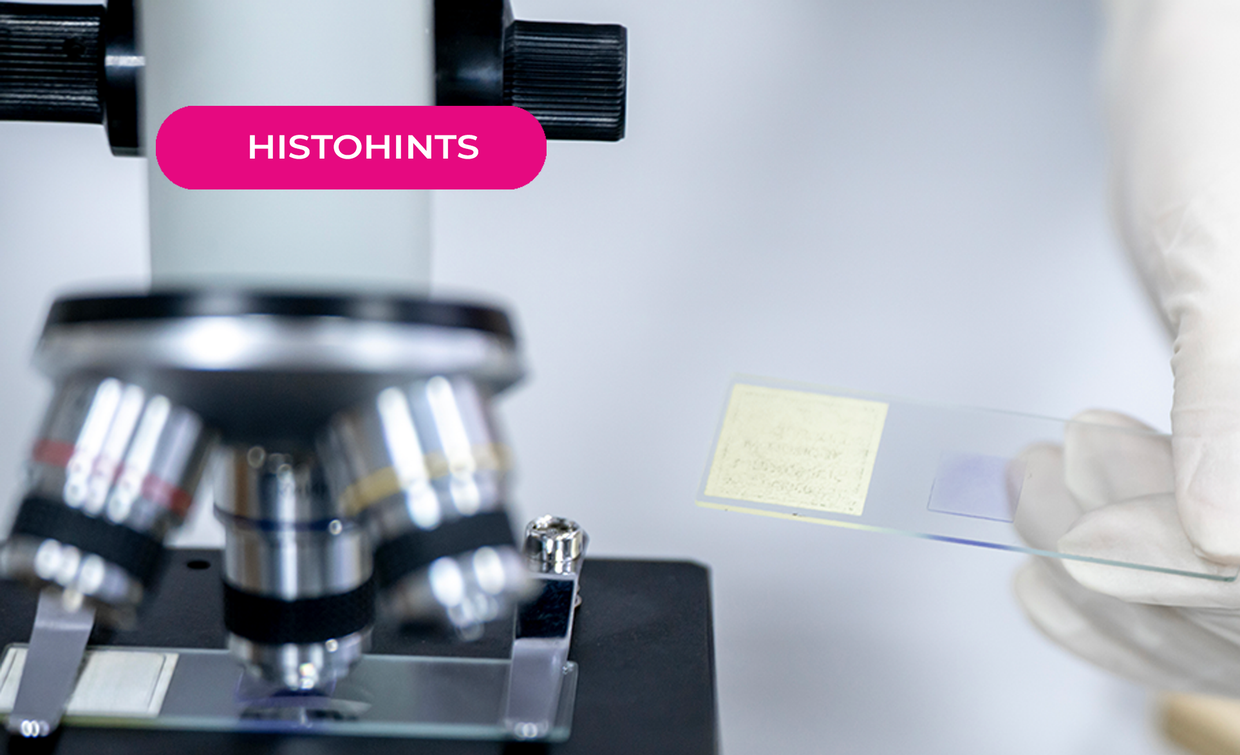
Coverslipping is the final, but crucial, step in preparing microscope slides. When done correctly, it protects the tissue section, preserves staining, and ensures clarity under the microscope. While automated coverslippers are common in high-throughput labs, manual coverslipping remains essential in many settings, especially for delicate or specialty slides. Whether you're a new histotech or brushing up on fundamentals, here's a practical guide to mastering manual coverslipping.
Steps for Better Coverslipping:
-
- Prioritize safety first!
- Ensure proper ventilation, as clearing agents may release harmful vapors and irritants.
- Wear gloves to protect your hands from exposure to clearing agents and mounting mediums.
- Select the appropriate mounting medium.
- Choose a mounting medium compatible with your lab’s workflow and clearing agent.
- Choose the best coverslip/cover glass for your lab.
- Size – make sure to choose one that’s not too big or too small for your slides/tissue.
- Thickness – different thicknesses may be necessary for different applications or microscopes. #1 Thickness is a standard thickness used in most histology applications.
- Prepare the slides.
- Ensure slides are properly dehydrated and cleared before coverslipping.
- For slides coming directly from xylene, xylene substitutes, isopropyl alcohol, or water:
- Keep the slide in the clearing reagent until you are ready to coverslip. The slide must remain wet for proper adhesion.
- If coverslipping a dry slide, make sure the slide is completely dry.
- For slides coming directly from xylene, xylene substitutes, isopropyl alcohol, or water:
- Ensure slides are properly dehydrated and cleared before coverslipping.
- Apply mounting medium.
- Use the applicator or pipette to dispense the mounting medium onto the slide or coverslip.
- Apply just enough to spread evenly between the slide and coverslip.
- Avoid excess mounting media as it can delay drying, leave sticky edges, and interfere with labels or digital pathology.
- Use the applicator or pipette to dispense the mounting medium onto the slide or coverslip.
- Place the coverslip.
- Choose a technique that feels comfortable and controlled.
- Common methods:
- Hold the coverslip at a slight angle and gently lower it onto the slide.
- Lay coverslip flat. Hold slide at a slight angle and gently lower onto the coverslip
- Let the mounting medium spread naturally to minimize air bubbles
- Remove any excess clearing agent or mounting medium that may have seeped out with gauze or StatSwipes.
- Inspect and adjust.
- Check for air bubbles and ensure proper alignment.
- If needed, gently reposition the coverslip with forceps or a gloved finger.
- Bubbles can often be nudged out with light pressure.
- Dry and Cure.
- Lay slides flat to dry.
- Drying time depends on the type of mounting medium used.
- Do not stack wet; this can result in;a pile of stuck slides.
- Prioritize safety first!
Manual coverslipping may seem simple, but it requires precision, patience, and practice. Mastering this skill ensures your slides are not only protected but also ready for accurate microscopic evaluation. Whether you're working in a teaching lab, research setting, or clinical environment, good coverslipping techniques are a mark of histotech excellence.
Recent Posts
-

KT Slides & Background Staining
Background Whole slide imaging (WSI) is gaining widespread adoption in diagnostic and research path
-

Happy National Histotechnology Professionals Day!
Thank you for the vital role you play in providing the best possible patient care. We see your hard
-
Why HCA Mid-America Division only uses KT slides in their lab.
One lab's story of overcoming tissue wash challenges.